

It is Friday the 13th. In the markets, there is no such thing as bad luck—only bad architecture.
A story went viral on X yesterday morning that most of the institutional world is dismissing as a 'fake' or a 'glitch.' It involves a final-round interview at Goldman Sachs that ended in a rescinded offer within sixty minutes.
The candidate, an American analyst applicant, was asked the standard closing question: “Why should we choose you?”
He didn’t give a speech about his work ethic or his Ivy League pedigree. Instead, he shared his screen. He showed them a Polymarket profile belonging to a wallet named distinct-baguette.
Profit: $578,559 in four months.
Trades: 32,945 individual executions.
The Punchline: “I make your annual salary in three weeks.”
To the HR manager, this looked like a cocky gambler. But at The Gutschow Report, we don’t look at the ego; we look at the architecture. What this trader was doing is a legal, high-frequency version of a classic cinema heist.
The Richard Pryor Protocol
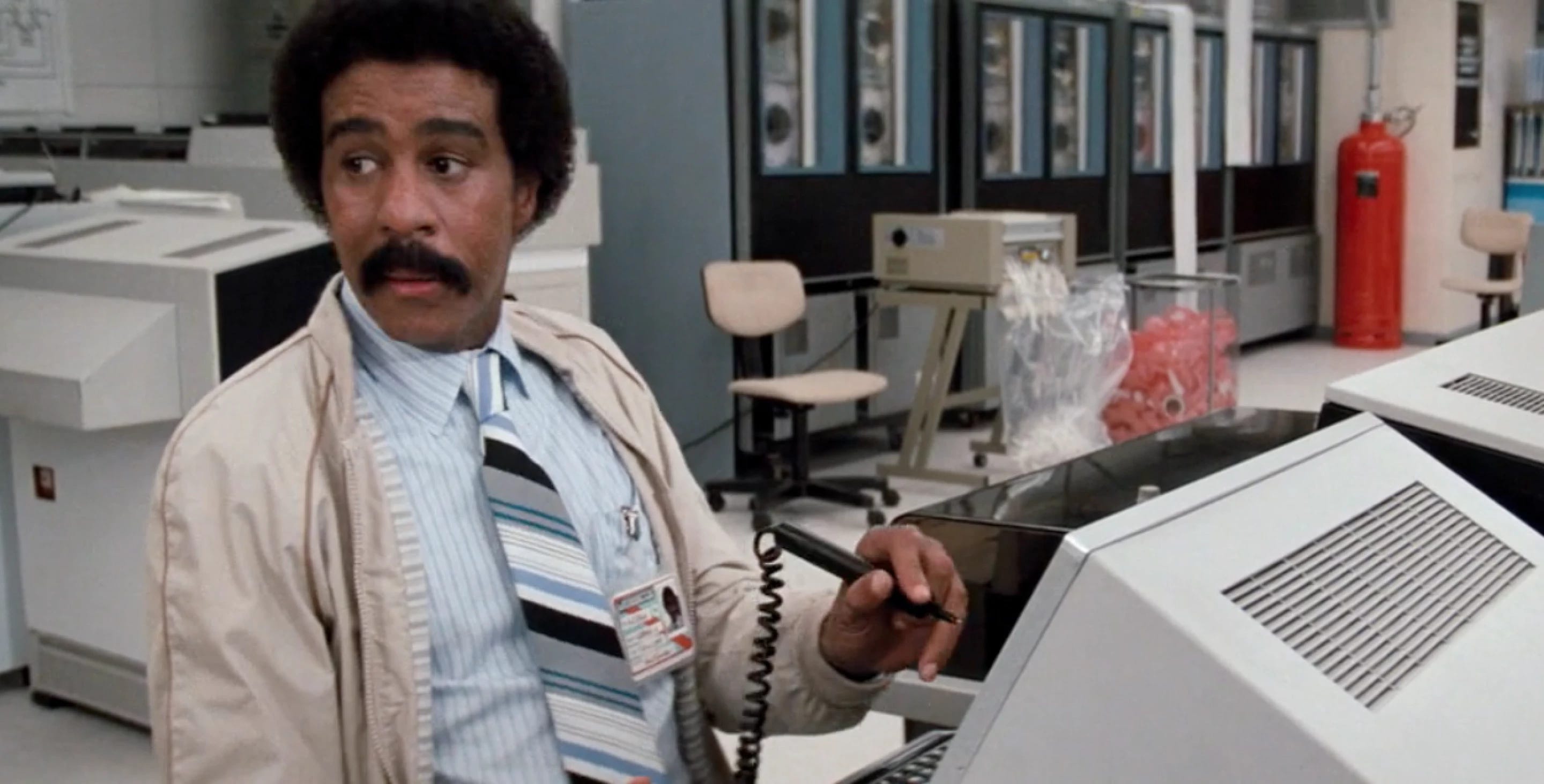
In the 1983 film Superman III, Gus Gorman (played by Richard Pryor) realizes that the bank’s computers round down every transaction to the nearest cent. He writes a program to redirect those “fractions of a cent” into his own account. In computer science, we call this “Salami Slicing.” I prefer a more precise term: Structural Shaving.
The trader at the center of the Goldman story isn’t “predicting” the price of Bitcoin or the winner of an election. He is looking for a Math Gap.
The Architecture of $0.97
On Polymarket, every binary market (YES or NO) must eventually settle to exactly $1.00. Therefore, in a rational world:
However, when the market panics—specifically in high-frequency 15-minute windows—the order books desync. Retail traders dump their “YES” shares in fear, and the “NO” buyers haven’t arrived to fill the gap.
For a few seconds, the math breaks:
YES drops to $0.48
NO drops to $0.49
Total Cost: $0.97
Because one of those two must happen, a payout of $1.00 is a mathematical certainty. By buying both, you are buying a guaranteed dollar for 97 cents. This isn’t gambling; it’s a systematic harvest of human irrationality.
The Skeptic’s Tax: Auditing the Baguette Math
Whenever a profile like distinct-baguette goes viral, the retail crowd immediately pulls out a calculator and attempts to debunk it with simple multiplication ($0.03 x trades). They miss the three pillars of institutional execution:
1. Compounding Velocity The skeptics assume a fixed bet size. In reality, this is a velocity play. If you start with $10,000 and capture a 1.5% net spread (post-slippage) every 15 minutes, you aren’t just making $150. You are reinvesting the principal.
The Math: Capture 1.5% just 4 times a day, and you are compounding at roughly 6% daily. Over 120 days (four months), that is the difference between a “hobby” and a half-million-dollar wallet.
2. Volume Incentive (Rebates) On high-frequency platforms, a trader with 32,000+ executions isn’t just a taker; they are often a Market Maker. Professional accounts often receive liquidity rebates or operate on fee tiers that approach zero. The “fees eat the profit” argument is a retail problem, not a Principal problem.
3. “Tail” Events The critics point to the “Biggest Win” ($11.4k) as an outlier. In a Structural Shaving strategy, you harvest the 3% gaps to fund your “free” directional bets. You use the house’s money (the arbitrage) to buy the 2663% moonshots. The $578k isn’t just from the “shavings”; it’s the result of an architecture that allows you to take massive risk with zero personal downside.
The Friday Liquidity Brief
While this trader is shaving cents on the blockchain, the same “Math Gaps” are appearing in the equity markets. As we wrap up our first week at The Gutschow Report, here are three structural opportunities I am monitoring:
Giant #1: Intel (INTC) — The 1999 Discount
The market is currently pricing a “NO” on Intel’s 18A turnaround with extreme prejudice. Following this week’s softer Q1 guidance, INTC is trading at a Price-to-Sales (P/S) ratio of ~4.3x, significantly below the industry average of 7.8x. Like the Polymarket trader buying a $0.48 share on a certain outcome, the market is discounting the “National Champion” floor being built by U.S. CHIPS Act funding and NVIDIA’s strategic $5B investment to secure packaging capacity. At these levels, you aren’t buying a chipmaker; you are buying the only High-NA EUV lithography infrastructure in the Western hemisphere at a liquidation price.
Giant #2: Duke Energy (DUK) — The “Boring” Arbitrage
Utility demand is hitting record highs due to AI data center buildouts, yet DUK is trading at a “boring” discount. This week, management confirmed a $103 Billion capital plan—the largest fully regulated program in the industry—projecting 5%–7% EPS growth through 2030. As data centers scale from 50% to 75% of their economic load growth, DUK represents a regulated, guaranteed capture of the most essential commodity in the 2026 AI economy.
The IBIT Bottleneck
Finally, there is the 1.2% friction gap. I am observing a consistent liquidity bottleneck where the iShares Bitcoin Trust (IBIT) structure creates entry friction for institutions. While IBIT defied broader outflows this week (seeing $60.03M in net inflows while peers saw massive exits), the 0.25% expense ratio combined with the bid/ask spread during “Redemption Swells” means that direct BTC ownership currently offers a roughly 1.2% yield advantage for those with the architecture to self-custody.
The Gutschow Verdict
Goldman Sachs didn’t pull the offer because the trader was “unprofessional” or “unmanageable”. They pulled it because he was obsolete—and because he didn't need them.
Goldman hires analysts to spend 100 hours a week building spreadsheets that hope to find a 5% edge over a year. This trader found a 3% edge every fifteen minutes by scavenging the “shavings” of market inefficiency.
The Final Word
This is the ultimate lesson for the Principal mindset:
Most people trade the Narrative (who will win?). The pros trade the Architecture (is the math broken?).
Thank you for a phenomenal first week. On Monday, we dive into the “30-Year Opportunity” and why the Quality Sector is currently at a generation-defining valuation low.